Monday, November 9, 2015

Michel Limbos: A Personal Recollection


When you get to an advanced age you become aware that your relatives and friends are falling like ninepins. Thus it was with sorrow and nostalgia that I heard last week of the death of Michel Limbos, a prominent member of the Ottawa translation and interpretation community. It's true that since I moved to Spain nearly two decades ago I had lost all contact with him, but in the 1980s we worked closely together. I knew him in two of his roles. He was year after year a reliable teacher in our undergraduate translator training program at the University of Ottawa, where it was our policy to employ professional non-academic translators as instructors. And more personally he was my valued booth colleague on conference interpreter assignments. He had a quality that made him very pleasant to work with: his courteousness. He illustrated that the best interpreters have qualities besides the linguistic ones. He was a man of the world, having been born in Africa, educated in Belgium, and come to Canada as one of the generation that was recruited in the drive for bilingualism and better French.

When he was translation manager at the Canadian Export Development he was also my employer for a while in the mid 1980s. At EDC he ran one of the few services in Canada for Spanish translation; however it was for French that he set me to interpret EDC's monthly country-by-country creditworthiness meetings for the Senior Management Committee. These were very lively presentations by a French economist. I learnt a lot from it, so I was grateful for the opportunity.

The two strands, interpreting and the School of Translators, came together in an incident that brought out another of his qualities: his loyalty. When we started the interpreter training degree we put into it a component a compulsory on-the-job experience period which we called the practicum. It was very unusual at the time but we were encouraged by the success we'd already had with practicums for written translation. Practicums are valuable in interpreter training courses for several reasons, and one of them is that conference interpreting is a performance. It may be performed before a small group or it may, these, days, be broadcast to millions. Either way, you have to overcome stage fright. So to give our students the necessary 'baptism of fire', we used to organize conference teams ourselves and hire them out. However, we put strict conditions on this activity, and one of them was that the students must always be accompanied by an experienced professional to counsel them and to take over if they broke down. Unfortunately this procedure ran into vehement opposition from some of the members of a certain leading association of professional interpreters. They threatened to blackball our students and they made it difficult for us to recruit supervisors. But Michel and another interpreter (Jacqueline Mejias) stood by us. Eventually the association in question admitted Michel, but that was many years later at the end of his career.

He also stood by me in my painful relationship with the board of ATIO, of which I was president at the time. On one occasion he was the only member who turned up on time for the meeting, while the others were in cabal outside.

Thank you Michel. I will not forget you.

Image
www.legacy.com

Tuesday, October 13, 2015

More About Translating The Book of Mormon

Long ago on this blog, in 2012, there was a post about the first translation of The Book of Mormon into Spanish. To find it, enter mormon in the Search box on the right. It's an adventure worth reading about. The translator, Melitón G. Trejo, was born in Spain and arrived in the American West by way of the Spanish army in the Philippines. In Utah he met Brigham Young himself, who appointed him to the translation team. Far from being a Professional Translator, Melitón ended up as a fruit farmer in Arizona.

There was a passing mention in that post of an earlier translation, the first of them all, into French, from which Melitòn drew encouragement. But only recently did I read the complicated history of that French translation. Like the Melitón story, the information is drawn from the pages of a historic American newspaper, The Deseret News, which has published a series of articles about early Book of Mormon translations from places as far apart as Denmark and the South Pacific. It was an era of surprising American missionary endeavour, and not only by the Mormons. When I was studying 19th-century Lebanon, I learnt about the contribution of the American Presbyterians to the 'Arab Awakening' in that country.
"The first French edition of the Book of Mormon, published in 1852, had on its title page: "Traduit de l'Anglais par John Taylor et Curtis E. Bolton." A more accurate statement would have credited Taylor as supervisor of the translation, which was carried out by Bolton, Louis A. Bertrand, a Mr. Wilhelm and Lazare Auge.

"In June 1850, The Church of Jesus Christ of Latter-day Saints opened the French Mission in Paris with then-Elder John Taylor, of the Quorum of the Twelve, (who later was the third president of the church) as president and Bolton and John Pack as counselors. Bolton, the only one who spoke French, was appointed by President Taylor to begin translating the Book of Mormon. Within the next few months, Bolton and President Taylor met Bertrand, an editor of the Icarian newsletter "Le Populaire." Bertrand and Wilhelm joined the church on Dec. 1, 1850. Bertrand began helping with church publication efforts. Wilhelm was assigned to help translate the Book of Mormon, but quit work in late February and left the church soon after.

"On March 22, 1851, Auge, a nonmember friend of Bertrand's in need of a job, replaced Wilhelm in the translation work, though he knew no English. Bertrand was fired from "Le Populaire" on Nov. 18, 1851, and this allowed him to take over for Auge and speed up the translating of the Book of Mormon, and it helped distance him from the volatile political scene.

"The translation was almost complete when, in the midst of political upheaval, President Taylor was ordered to leave France. He reorganized the mission presidency, making Bolton president and Bertrand counselor and departed.

"Printer Marc Ducloux began setting type on Jan. 13, 1852, and the first run of 1,000 copies was completed by Jan. 22."
Of the initial translators, McClellan (see Reference) wrote,
"In light of the political, cultural, and even social impediments in France at the time, it is no small wonder that this team of five men, each with different ideals and interests, was able to produce a translation that has endured for so many years."

I revert to the epic of the Mormon translations because there is bound to be a session on religious translating at the International Conference on Non-Professional Interpreting and Translation (NPIT3) next May. Perhaps more than one session, because religious translating has always accounted for a large segment of altruistic translating activity. And we need to hear from and about the religions and sects that are less known than the Christian churches and Bible translation. If my health continues to improve, I hope to join you there.

References
Richard D. McClellan. Traduit de L'Anglais: The First French Book of Mormon. Journal of Book of Mormon Studies, Volume 11, Issue 1, pp. 29-34. Provo, Utah: Maxwell Institute, 2002. Available online at maxwellinstitute.byu.edu/publications/jbms/?vol=11&num=1&id=290.

Rachel Brutsch. Book of Mormon translation: French. Deseret News, 2012.

NPIT3, Zurich, 5-7 May 2016. International forum for Non-Professional Interpreting and Translation, the latest paradigm in translation studies.

Image
John Taylor, the third President of The Church of Jesus Christ of Latter-day Saints, who supervised the first translation of The Book of Mormon into French. Source: Deseret News.

Friday, September 18, 2015

The Four Miracles of Translation


My thanks, literally heartfelt, to the medical and nursing staffs of the La Fe, Paré Jofré and other hospitals in Valencia, Spain, for snatching me back from the brink. And particularly to Dr José Luis Velero of La Fe, who had me fitted out with a pacemaker in the nick of time.

A long spell in hospital ought to be an opportunity for deep reflection and profound ideas. The fact is inspiration doesn’t work that way and a lot of time can be wasted going over and over what one already knows. Nevertheless there is a belief that has dominated my thoughts these last days.

The Four Miracles of Translation
Back in the 1920s the philosophers Ogden and Richards opined that translation was the most complex of all human mental operations. I’m not sure of that, but it certainly is a miracle. Indeed not just one miracle but a pyramid of at least four miracles of evolution.

Translating is by definition an operation between two languages. The first miracle is therefore language itself. We know that it evolved (or appeared suddenly according to some linguists) but not when or where. Perhaps around half a mllion years ago. Not more, not spoken language anyway, because we hadn’t acquired the physical organs of phonation until then. Yet even that is misleading, because we could have developed non-sonic sign languages earlier. Anyway we learnt it and we learnt how best to use it. But because sound is evanescent and there was no recording, we have no record of its beginnings,

The second miracle, less obvious, is that each of us is made not only to learn one language or the language, but to master many languages. Three, ten... there is plenty of evidence of people learning that many. The limit seems to be imposed not by a person’s capacity to learn them but by the time and energy they have available to do it with. And not only to learn them but to keep them separate from one another in the mind from an early age (about three years) and use each of them appropriately according to context. Why did we need more than one? But then nature is profligate and we can do most things more ways than one.

The third miracle, the most crucial for us translators, is that we are able to transfer information and hold it constant between two languages. At least ‘information’ is what people usually think of; but in fact we also communicate feeling, emotions, whether we are aware of it or not. A translation that doesn’t do all of this may be a correct translation linguistically but it’s not a complete translation.

Is that all? Not quite. One thing still missing is the checking ability: a meta-miracle that enables us to understand and feel the original and the translation simultaneously and to judge whether they are equivalent, and if not to say why not. This is what translation teachers need. Yet most people, even expert translators, don’t think about this fourth meta-miracle, which enables us to detect fine shades of difference and can be refined with training.

REFERENCES
C. K. Ogden and I. A. Richards, The Meaning of Meaning, 1923. Several modern reprints.
Origin of language. Wikipedia, 2015.

IMAGE
C. K. Ogden. He is best known as the inventor of Basic English, a stripped-down English that uses only 1,000 words.

Friday, May 29, 2015

Illness

Apologies for the recent absence of postings on this blog. Translatology has been ill, in fact he’s still ill. Postings will be resumed ASAP. Thank you for your understanding.


NPIT3, Zurich, 5-7 May 2016. International forum for Non-Professional Interpreting and Translation, the latest paradigm in translation studies. Get with it!

Friday, April 24, 2015

NPIT3 Call for Papers

The long-awaited news of NPIT3 has arrived at last. Here it is. For those of you new to the field, NPIT stands for Non-Professional Interpreting and Translation. We have to be grateful to IUED for picking up the ball and running with it. I've agreed to serve on the advisory committee.

3RD INTERNATIONAL CONFERENCE ON NON-PROFESSIONAL INTERPRETING AND TRANSLATION (NPIT3)
Call for Papers

Institute of Translation and Interpreting (IUED)
Zurich University of Applied Sciences,
5-7 May 2016 in Winterthur (near Zurich), Switzerland


Probably the most widespread form of cultural and linguistic mediation, non-professional interpreting and translation has slowly, after 40 years, begun to receive the recognition it deserves within interpreting and translation studies. Pushing the boundaries of many definitions of translation and interpreting, it encompasses a dynamic, under-researched field that is not necessarily subject to the norms and expectations that guide and constrain the interpreting and translation profession. Even the designation “non-professional” is unclear, referring at once to unpaid, volunteer translation or interpreting and to translators and interpreters without specific training.

NPIT3 provides a forum for researchers and practitioners to discuss definitional, theoretical, methodological, and ethical issues surrounding the activities of non-professional interpreting and translation. Carrying forward the discussion initiated by the First International Conference on Non-Professional Interpreting and Translation (NPIT1) at the University of Bologna/Forlì in 2012 and continued at Mainz University/Germersheim in 2014 (NPIT2), we invite proposals for panels, presentations, or posters that deal with any theoretical, empirical and methodological aspect of research related to the general theme of non-professional interpreting and translation.

Topics may include but are not limited to:
 Ad hoc translation/interpreting in everyday situations
 Language brokering by children and adolescents for family members and their entourages (oral. written or sign language)
 Other interpreting by children and the development of their ability
 Church and missionary interpreters and translators
 Non-professional AVT and new media (e.g. crowdsourcing, fansubbing, fandubbing, fanfiction)
 Non-professional translation/interpreting in community, health, pastoral or social care
 Non-professional translation/interpreting in crisis situations
 Wartime temporary interpreters and translators
 Interpreting in prisons and between prisoners
 Organization of non-professional interpreting and translation services
 Recruiting and/or training non-professional interpreters and translators
 Professionalization, certification, and para-professionalism
 Interdisciplinary approaches to research into non-professional interpreting and translation
 Mapping the field of non-professional interpreting and translation

The conference language will be English. However, presentations in German, French, and Italian are welcome. To facilitate peer evaluation, proposals and abstracts should be submitted in English.
Contact: npit3.linguistics@zhaw.ch
Website: www.zhaw.ch/linguistics/npit3

Submission procedure:
Proposals for panels, individual papers, and posters should be submitted as an attached file (i.e. .doc, .docx, .rtf, or .pdf) to npit3.lingustics@zhaw.ch by 30 September 2015. Details about the form of each type conference contribution are provided below.

Panel proposals:
Panels should comprise 3-4 paper presentations given within a 120-minute timeframe and cover one or more of the topics listed above. Panels will be reviewed en bloc based on the abstracts provided by the organizers of the respective panels. A panel submission must include the following:
 an outline of the theme and aims of the panel as well as an appropriate title (including the names, affiliations, and email addresses of the panel organizers)
 a list of invited contributors and/or discussants (including their names, affiliations, email addresses)
 5 keywords that describe the panel (e.g., subject, methodology, theoretical framework)
 an abstract for each contribution to the panel (300 words including references)
Proposals for individual papers:

Each paper presentation will be scheduled for 20 minutes plus 10 minutes discussion. A paper submission must include the following:
 the title of the paper, name, affiliation, and email address of the author(s)
 5 keywords that describe the paper (e.g., subject, methodology, theoretical framework)
 a 300-word abstract (plus references)

Proposals for posters:
A slot in the conference program will be allocated to short poster presentations (max. 5 minutes), and the posters will be on view for the duration of the conference. A poster submission must include the following:
 the title of the poster, name, affiliation, and email address of the author(s)
 5 keywords that describe the poster (e.g., subject, methodology, theoretical framework)
 a 300-word abstract (including references)
All abstracts for panels, individual papers, and posters will be double-blind peer-reviewed and evaluated anonymously by the NPIT3 Advisory Board and local organizers. The submissions will be assessed on the basis of their relevance to the conference theme and topics as well as their theoretical background and research design.

Important dates
Deadline for submission (panels, individual papers and posters): 30 September 2015
Notification of acceptance: 1 December 2015
Deadline for speaker registration: 1 April 2016

Conference information
Registration, fees, accommodation, and venue: available on the conference website in early 2016
Conference chair: Gary Massey
Local organising committee: Michaela Albl-Mikasa, Maureen Ehrensberger-Dow, Andrea Hunziker Heeb, Raquel Montero
Contact: npit3.linguistics@zhaw.ch
Website: www.zhaw.ch/linguistics/npit3

Image: Winterthur. Source: Wikipedia

Monday, April 20, 2015

Urdu Language Brokering in the USA


It's been quite a while since there was anything on this blog about language brokering in its heartland, the USA. (For those of you who are unfamiliar with it, language brokering is the interpreting done by the bilingual offspring of immigrant parents for their parents, families and other members of their entourage.) So I hasten to pass on a description that has just been published. It contains a surprise:
"Pakistani-Americans are the second fastest growing [immigrant] group in the United States according to the Pew Research Center, and yet many are unable to fully adapt to their new lives due to a persistent language barrier. Research conducted by Asian Americans Advancing Justice shows over 80% of Pakistani-Americans do not speak English at home, while over 12% suffer from linguistic isolation. Linguistic isolation is defined by the US Census Bureau as living in a household in which all members aged 14 years and older speak a non-English language and also speak English less than 'very well'."
So
"The Pakistani community faces the challenge of a language spoken rather rarely in America. Or at least perceived by Americans as rare [says one child of immigrants]."
It's at this point that the young language brokers come into their own as essential intermediaries.
"'As an 8-year-old child, I had to accompany my grandmother to the doctor to ensure the doctor could understand her,' [one now adult broker named Pandya says] of her own family's experiences with linguistic isolation. 'That's a huge burden on a child. For one thing, no 8-year-old knows all the medical terminology. I felt I was my grandmother's anchor.'
"Pandya also recalls how many Indian and Pakistani friends of hers helped their parents do the taxes and pay the bills – because the adults had trouble understanding even the most basic instructions. She says the problem can also affect the children's education. Linguistically isolated children are often forced to serve as interpreters at parent-teacher conferences if the schools are unable to provide interpreters. The young people I work with end up acting as interpreters [for their parents],' says Pandya. Imagine you're 15 years old. What are you going to do if you're serving as that intermediary? [Of course] you're going to tell your mom 'Yeah I`m getting straight As.'
"'The specifics of anything tend to do with class,' she says, 'If you are a well-to-do Pakistani immigrant…, you probably spoke English back home… It's more a function of class and language is tied to that.'
'The power dynamic is flipped, says Pandya. 'You are no longer the child, you're the adult now. You're growing up really quickly.'"

Sources
Eric Cortellessa. Lost in Translation. Newsweek, 13 April 2015. http://newsweekpakistan.com/lost-in-translation/

Urdu. Wikipedia, 2015.

Image
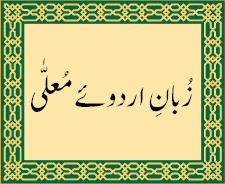
Urdu calligraphy. Source: Wikipedia.

Sunday, April 12, 2015

Fit For Purpose


In a paper she has recently revived on academia.edu (see References), Elisabet Tiselius, citing Grbic, reminds us that there are other ways of evaluating interpretation quality than the traditional one.

So what's the traditional one? It's to chunk the source text and its translation into short segments (translation units), compare them one by one, assigning a score of 'good' or 'bad' to each one (a procedure that is inevitably subjective to some degree), and then add up the scores or else subtract them from 100. Modern alignment software makes this easy.

However,
"Grbic explores the concept of quality as it has been treated in interpreting literature and interpreting studies. She divides the construct of interpreting into different dimensions according to how it is perceived…. Third, quality is defined as something that is fit for a certain purpose, with a premium placed on customer satisfaction and value for money."
What Grbic says about interpreting applies also to written translation.

Here are two examples to illustrate "that is fit for a certain purpose", or for short fit for purpose (FFP). The first has already been recounted on this blog but it was back in April 2010 – Gosh! This blog has been going for five years already! – so I may be forgiven for repeating myself. Back around 1990, a branch of the Canadian government was using machine translation (MT) to translate into French the notices of job vacancies that were posted up each day in government employment centres in English. It was a requirement of the Canadian laws on bilingualism. The MT system contracted to do it was, to say the least, rather primitive, and at one point it became notorious for a classic mistake. The French for man is homme. But Man. (with the initial capital and the dot) is also a standard abbreviation for Manitoba, one of the Canadian provinces. So whenever there was a job vacancy in a town in that province, the location would come out, for example, as Winnipeg, Homme. One day I found myself sitting next to a senior official from the ministry at a conference and I couldn't resist asking him about this. He was piqued to retort:
“The only people who complain about our translations are professional translators and university professors like you. Our clients are happy with them because they get them the same day. If they had to wait even 24 hours while we sent them to the government translation bureau, the chances are that the vacancy would already be filled. And as for Manitoba / Homme, well they soon learn that Homme means Manitoba. For them, our translations serve their purpose.”
The second example is much more recent, in fact from last week. A Spanish student wanted to find articles about how expert translators use their dictionaries. Among the many that Google found for her was one in German and she doesn't know any German. So she ran the title through Google Translate, which gave her:
"Para fundamento técnico-acción de uso del diccionario de investigación."
Apart from the bad grammar of the first part, the latter part of the Spanish is an outright mistranslation. If we compare it with the German
- Zur handlungstheoretischen Grundlegung der Wörterbuchbenutzungsforschung
we see that the translation ought not to be uso del diccionario de investigación (use of the research dictionary) but investigación del uso del diccionario (research on the use of dictionaries). Complex syntax is still a stumbling block for Google Translate and software like it. Never mind. All she wanted at that stage was a confirmation that the article dealt with the use of dictionaries, and she got it. The translation was screwed up yet it was nevertheless fit for purpose.

Incidentally this use of MT to search for relevant publications like needles in a haystack, known as scanning, was one of the earliest applications of MT. In the early 1970s, alarmed by the unexpected success of the Russian Sputnik, the United States Air Force used it at their Wright Patterson base to scan Soviet technical publications. Usefulness for scanning may still be MT developers' best defence against critics of their systems' output.

However, the admission of FFP as a standard of translation leads to another problem. How can we score it and scale it? Unlike the traditional approach, it has no established procedures. The government official implied his own simplistic answer: no user complaints means 100% FFP. But below 100%? Perhaps a solution lies in sounding out customer satisfaction with a one-line questionnaire to be attached to each translation:
"On a scale of 1 to 5 (useless to very satisfactory), indicate whether this translation has met your needs."
Other suggestions welcome.

References
Elisabet Tiselius. The development of expertise – or not. Three simltaneous interpreters' development over time. 2013. Available for downloading from academia.edu (https://su-se.academia.edu/ElisabetTiselius).

Nadja Grbic (pardon the missimg diacritic on the c). Constructing interpreting quality. Interpretng: International Journal of Research and Practice in Interpreting, vol. 10, no. 2, pp. 232-257, 2008.

Herbert Ernst Wiegand. Zur handlungstheoretischen Grundlegung der Wörterbuchbenutzungsforschung. Lexicographica No. 3, pp. 178-227, 1987.

Image
Elisabet Tiselius.